The increasing focus on financial literacy worldwide is inspiring more people to prioritize money management, recognizing the potential of investing to grow their wealth and secure their futures. Knowing where to invest money is crucial to utilizing all of its amazing opportunities, especially in a country like the UAE, which is considered a business hub and an investment powerhouse in the Middle East.
Achieving financial freedom is a personal journey that requires dedication and commitment. Investment is an art that cannot be learned overnight. It requires a deep learning curve and many trial-and-errors, alongside effective strategies and prompt decision-making.
A large proportion of millionaires in the UAE and around the world are self-made, having accumulated their wealth through consistent investing, strategic financial decisions and long-term planning instead of relying on inheritance. All of them had one thing in common. They believed that engaging in regular and consistent investing over a long period was the key to their success.
The UAE’s investment landscape continues to evolve, with new trends, markets, and emerging sectors offering promising return potential.
In this blog, we have gathered insights from financial advisors and investment experts to help you understand how to invest money in the UAE, narrow down the best options, and provide tested strategies for beginners to grow their wealth.
The key to achieving financial freedom and growing wealth is creating a gap between your income and expenses and then investing the surplus in something that produces profitable returns or appreciates in value over time.
Most people who are looking to start their journey with investments focus on the second part, i.e., investing the surplus before pulling their finances and expenses together to create the expected gap. This is one of the primary reasons why the majority of the people who start investing fail.
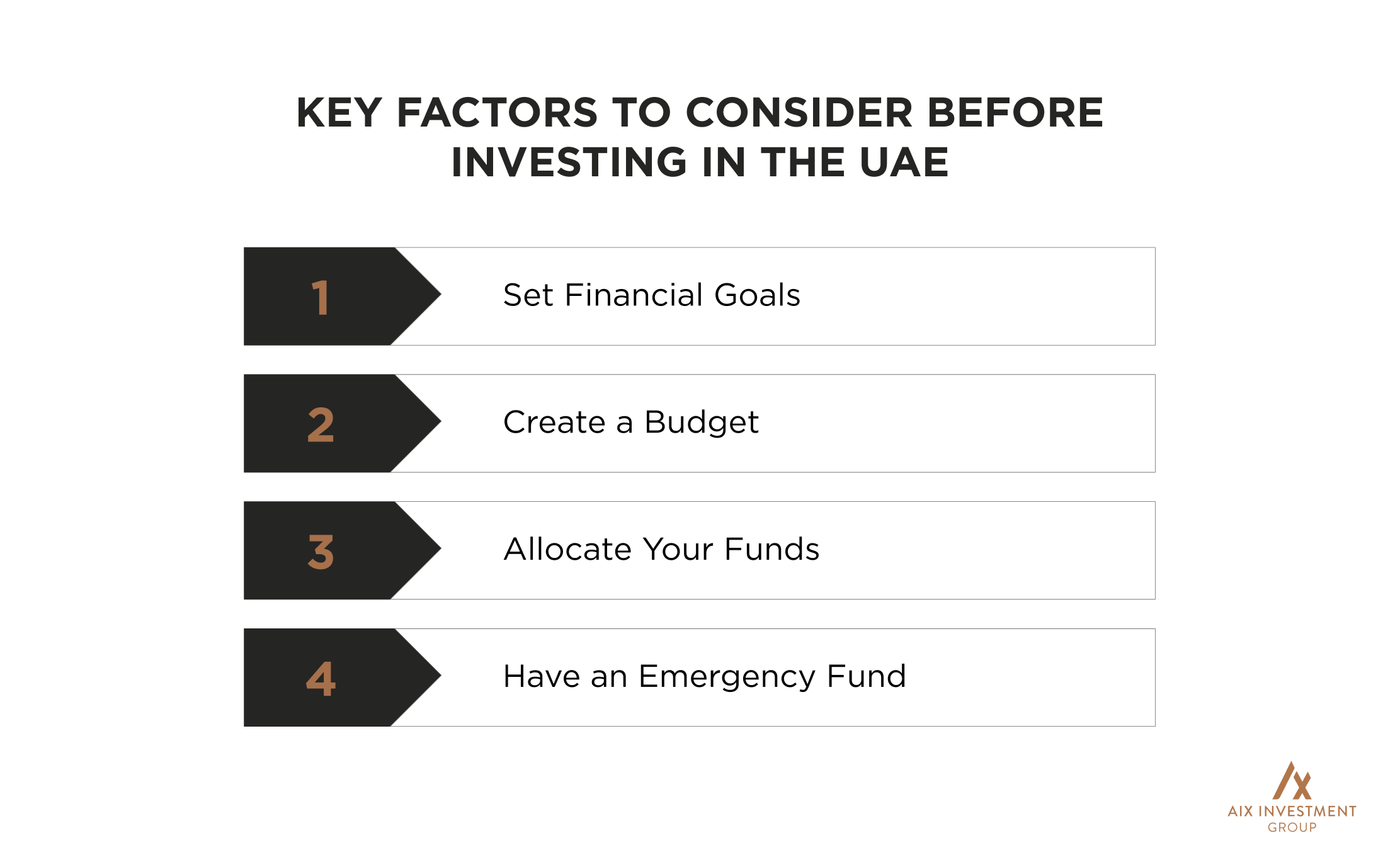
Here are three key approaches you should take to set the right foundation for your investment and create a healthy gap between your income and expenses.
First things first, set a financial goal. Whether you are saving for retirement, an educational fund, or buying a house, make sure you have a defined goal that complies with the SMART principles (Specific, Measurable, Attainable, Realistic, and Timely). By linking your financial decisions to a defined purpose, you are more likely to stay disciplined and committed to your plan, which helps you to be mindful of your expenses and how you manage your income. Most importantly, it allows you to set priorities straight when it comes to money management.
One of the highly recommended ways to create a gap in your expenses and income is to have a budget. It is also a highly effective way to pull your finances together and keep you disciplined towards reaching your goals. A well-structured budget is a roadmap that tells you where to allocate your money instead of wondering where it was actually spent.
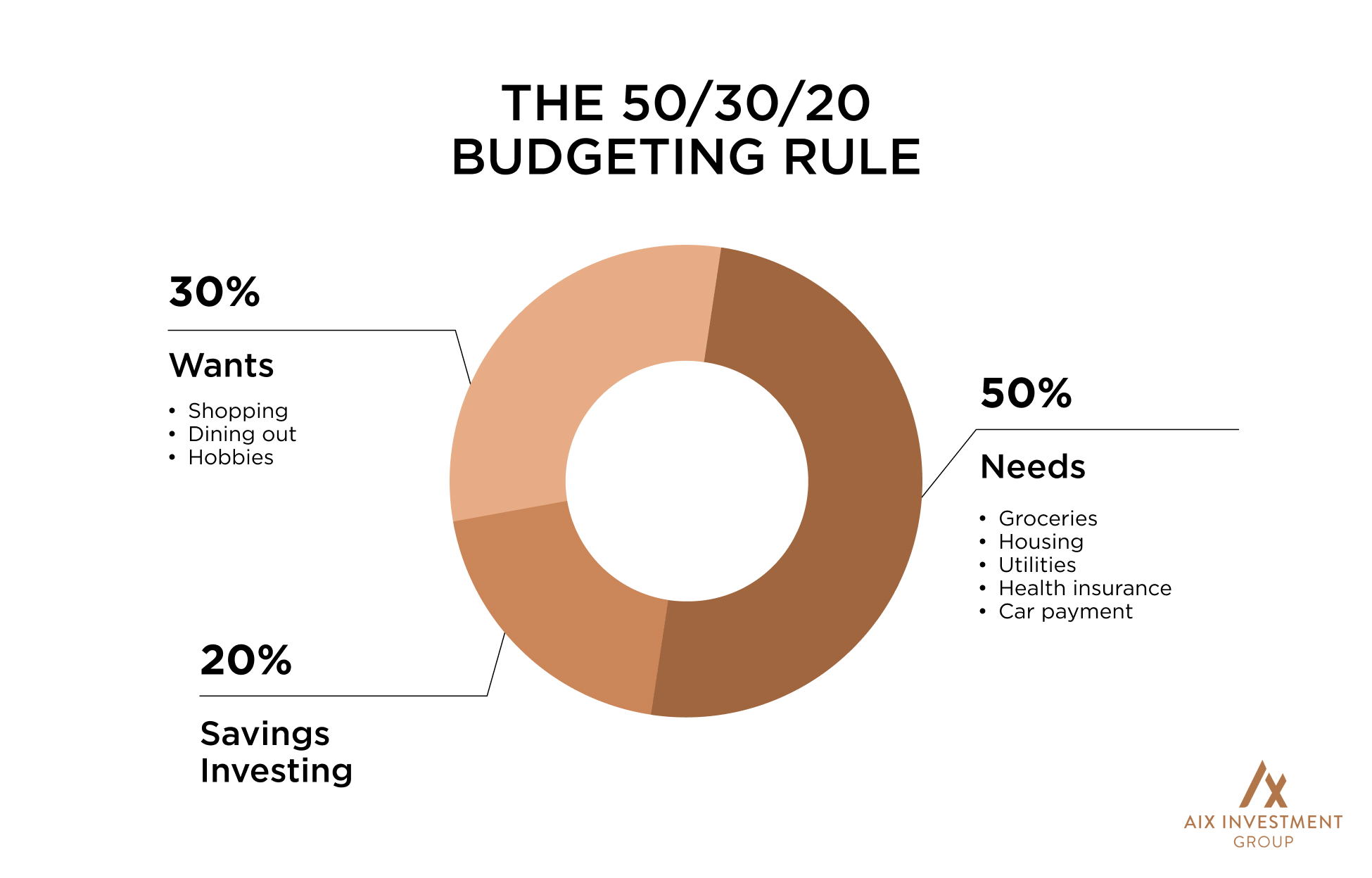
One popular budget rule you can follow is the 50/30/20 concept. This is where you spend 50% of your income on essential things like rent or mortgage, food, clothing, utilities, and 30% on your wants like hobbies, going out, entertainment, etc. The remaining 20% is your monthly savings. Although the savings round up to a small percentage of your salary or monthly earnings, it is one of the most important aspects of budgeting as it aims to ensure that you are spending less than you earn.
A good practice of budgeting goes beyond creating it, requiring the discipline to actually stick to it. The ideal way to do this is to set aside a percentage of your income for savings before spending.
It is recommended that you have a separate account for savings. Upon receiving your salary or income, deposit a percentage of it into your savings account, then work with what’s left for your expenses, prioritizing your needs over wants. Doing so will help minimize the temptation to overspend.
Being proactive and prepared for life’s unpredictable moments allows you to handle them more effectively. In simple terms, an emergency fund is the money you set aside for unexpected expenses resulting from job loss, medical crises, natural disasters, unplanned repairs, etc.
Without an emergency fund, you risk using the money allocated for investments to address these unforeseen mishaps. Being unprepared for emergencies also means you will likely rack up credit card debt and pay higher interest on it.
To eliminate these risks, consider putting up an emergency fund. Financial advisors recommend that an emergency fund should have at least six months’ worth of living expenses for both needs and wants.
The primary goal behind having an emergency fund is to be a financial safety net, granting you ease of access to cash assets or liquidity in critical situations rather than making a profit. However, this fund must only be accessible in times of need.

Real estate has long been regarded as one of the most established asset classes in the UAE, supported by a mature property market and continued investor interest. Many high-net-worth individuals (HNWIs) have accumulated wealth and created successful portfolios through investments in the UAE’s diverse financial and real estate markets.
While it has its fair share of strong features, it can be less accessible to beginners. This is because they require a huge capital outlay, and diversification is hard as you need a lot of money. Moreover, it also comes with challenges in areas such as managing tenants, hidden and complex fee structures, and an illiquid market–difficulty selling or converting properties into cash due to a lack of interested buyers.
New investors are recommended to start with Real Estate Investment Trusts (REITs). It is a company that owns and operates income-producing properties, which can be either commercial or residential.
These companies may own and operate income-generating properties, such as office buildings, shopping malls, and apartments (Equity REIT), or provide financing to real estate owners through mortgages (Mortgage REIT). By investing in REITs, you can benefit from market returns without the complexities of direct property ownership.You may earn money in the form of dividends and from the appreciation in the price of the REIT. Dividends are often distributed regularly, potentially providing a steady source of income.
REITs are traded on stock exchanges in a similar manner to publicly listed shares. Rather than purchasing and managing physical properties directly, investors gain exposure through ownership of the REIT itself. This structure generally provides greater liquidity than direct property ownership, allowing investments to be bought or sold more readily through the market.
Investing in REITs through ETFs (Exchange-Traded Funds) may provide broader diversification. Buying individual REITs has the same disadvantages as buying individual stocks, whereas ETFs allow you to diversify your portfolio across many REITs, helping to mitigate potential volatility.
A bond is a debt instrument that private companies or government entities issue to raise capital. The three major types of bonds are as follows:
There are two main ways to make money by investing in bonds. The first is through interest payments, where the bond issuer pays the bondholders at regular intervals. Many bonds pay interest at a fixed rate, known as the coupon rate, at regular intervals. However, some bonds have variable interest rates, while zero-coupon bonds do not make periodic interest payments.
When interest rates drop, bonds with higher rates become more valuable because new bonds offer lower returns. This means you can sell your older, higher-interest bond for a profit. Additionally, when the stock market is struggling, investors may increase their allocations to high-quality bonds, potentially supporting bond prices.
Most bonds have a predefined maturity date, when the issuer is scheduled to repay the principal. It provides a consistent stream of income for a certain period, depending on the type of bond, such as 10-year or 20-year bonds. However, some bonds, such as perpetual bonds, have no maturity date.
Compared with other investment options available in the market, high-quality bonds, particularly those with shorter maturities, are generally less volatile than equities. They are typically used to counterbalance stock investments. However, bond risk and volatility vary according to credit quality, maturity, interest-rate sensitivity, and market conditions.
As a diversification strategy in your investment portfolio, bonds offer many benefits and serve as a cushion when the stock market hits a rough patch. To safeguard and maximize your assets, make sure to conduct diligent research to understand if the company has a low-risk profile, as defined by bond rating agencies. Investors should also assess the issuer’s financial position, debt levels, cash flows, and the bond’s contractual terms.
Stock refers to a share of a company’s earnings and assets that individuals and institutional investors can buy. Owning shares of stock is another lucrative investment option in the UAE because it basically means you’re entitled to a portion of the company. Investors can make money from stock ownership in two ways:

Gold has long been considered one of the most trusted investment assets, both in the UAE and globally. Due to its limited supply, it is widely recognised as a store of value that can help preserve wealth over time.
During periods of inflation, recession, and economic instability, investors often turn to gold as a defensive option. Unlike currencies and many financial instruments, it has historically demonstrated resilience during challenging market conditions. Historical analysis suggests that gold outperformed the S&P 500 in six of the eight US recessions between 1973 and 2020. However, past performance does not guarantee similar results in future downturns, and gold’s effectiveness as a defensive asset varies across market conditions.
Gold reached successive record highs throughout 2024 and 2025 as investors sought safe-haven assets amid inflation concerns, geopolitical tensions, and global economic uncertainty. Although prices have experienced periods of volatility in 2026, long-term demand has remained supported by central bank purchases, geopolitical risks, and broader macroeconomic trends. Analysts, including J.P. Morgan, continue to maintain a positive long-term outlook for the precious metal although forecasts remain subject to changing economic and market conditions.
For investors, it remains a popular diversification tool, with options ranging from physical bullion and coins to shares of mining companies, mutual funds, exchange-traded funds (ETFs), and futures or options.
There are many ways you can invest in Gold, such as gold bullion (tangible gold), stocks of gold companies (similar to REITs), gold mutual funds, gold futures and options, and gold ETFs.
It is important to consider that, despite its benefits, this investment option also has certain limitations, particularly when compared with assets such as bonds and REITs. These include:
Cryptocurrencies, which emerged in 2009, initially faced widespread fear and skepticism. This was largely due to their association with illicit activities, extreme price volatility, lack of regulation, technical complexity, and overall newness. Additional concerns included their potential to disrupt the traditional financial system and their environmental impact.
Over the years, the crypto ecosystem has matured significantly, attracting many potential investors. This growth is boosted by factors such as wider adoption, improved regulation, technological advancements, diverse use cases, increased security, environmental awareness, and mainstream recognition.
The cryptocurrency market continues to evolve, with stronger regulatory frameworks and growing institutional adoption contributing to increased confidence in digital assets. The UAE has established itself as a leading destination for cryptocurrency, supported by a progressive regulatory framework and favourable conditions for investors.
In the UAE, individuals generally do not pay personal income tax or capital gains tax on profits from cryptocurrency held as a personal investment. However, different rules may apply to businesses or professional trading activities, so seeking independent financial and tax advice is recommended.
If you are considering tapping into this market, make sure you invest in cryptocurrencies through platforms that comply with UAE regulations, particularly those set by the Dubai Virtual Assets Regulatory Authority (VARA). Using regulated services is key to reducing all possible risks associated with this investment option. Similarly, trade only on platforms licensed and approved by the UAE authorities to avoid scams and ensure the security of your transactions.
It should be emphasized that while the investment market in the UAE is highly regulated, navigating it and maximizing returns requires a long learning curve and often cannot be achieved in a matter of a few months. Beginners may consider high-quality bonds and REIT funds based on their financial goals and risk tolerance. However, both carry risks and offer no guaranteed returns. Understanding these investments and seeking professional financial advice can help beginners make informed decisions.

If you’re a beginner and feel uncertain about selecting individual stocks or bonds due to limited time or expertise, mutual funds are another good investment option.
Mutual funds are investment opportunities that pool money from multiple investors and allocate it across a diversified portfolio of stocks, bonds, or other asset classes. These funds are managed by professionals who specialize in navigating market risks and making informed investment decisions on behalf of the investors.
One of the primary benefits of mutual funds is that they offer diversification, reducing the risk by spreading investments across multiple companies or sectors. When you invest in a mutual fund, you own shares of the fund itself– not the individual assets it holds.
Equity funds (stocks), fixed-income funds (bonds), balanced funds (mix of both), and specialty funds (focused on specific sectors or themes) are the common types of mutual funds.
Mutual funds can generate returns in several ways, including the following:
By structure:
By investment strategy:
Exchange-Traded Funds (ETFs) are investment vehicles that hold a mix of assets—such as stocks, bonds, or commodities—providing investors exposure to a diversified portfolio through a single share. ETFs are among the best investment options in the UAE, especially for those seeking capital growth or passive income depending on their underlying assets. Over the past few years, they have gained widespread recognition for helping investors build and maintain diversified portfolios at a relatively low cost.
For instance, the iShares Core MSCI EAFE ETF (IEFA) offers broad exposure to companies from developed markets outside the US and Canada. It also covers various industries and company sizes across Europe, Australia, Asia, and the Far East. Some investors choose not to buy individual securities; instead, they use ETFs to build a diversified portfolio more efficiently and at a lower cost.
Owning a single ETF provides access to a wide range of securities, while holding multiple ETFs can further enhance your diversification. For example, an investor might opt to combine ETFs focused on U.S. stocks, international stocks, real estate investment Trusts (REITs), and bonds. This strategy spreads investments across different asset classes and geographic regions, significantly reducing the overall risk of the portfolio although the extent of risk reduction depends on the ETFs’ underlying holdings and correlations.
For investors who prioritize capital preservation, fixed deposits and high-yield savings accounts are among the more conservative investment options. While they generally offer lower growth than stocks or real estate, they provide stability, predictable earnings, and greater peace of mind, making them well suited to conservative investors and beginners.
A fixed deposit (FD) allows you to place a lump sum with a financial institution for a predetermined term in exchange for a fixed interest rate. Withdrawing funds before maturity may result in penalties or reduced earnings.
A high-yield savings account functions like a traditional savings account but offers a more competitive interest rate while allowing easier access to your funds. It is often used to build an emergency fund or save toward short- and medium-term financial goals.
Because these products are generally less exposed to market fluctuations, they can help preserve capital during periods of economic uncertainty. They can also provide greater stability within a diversified portfolio alongside higher-risk assets.
However, despite these advantages, they also have several limitations, particularly when compared with stocks, REITs, and other growth-focused assets. These include:

While investing is the first step toward achieving financial security and freedom, it requires a lot more than meets the eye. Knowledge, expertise, discipline, and consistency are key factors that play a crucial role in the success of your investments.
In today’s fast-paced and ever-evolving investment landscape, mastering the complexities, risks, and uncertainties is no simple feat, especially for beginners. This is where trusted financial professionals like AIX come in, offering expert guidance to help you navigate the market with confidence and clarity.
With first-hand knowledge and experience, you can skip the complex trial-and-error process, making your journey to financial independence faster, more efficient and less stressful. For more information, please get in touch with their support team.
It depends on your financial goals, risk tolerance, and investment horizon. Given the current market conditions, bonds and REITs are among the investment options that may appeal to investors seeking relatively stable income, lower volatility than stocks, and portfolio diversification.
You can grow your wealth by investing in a diverse portfolio that includes options like ULIPs (Unit Linked Insurance Plans), mutual funds, stocks, real estate, corporate bonds, Gold ETFs, National Savings Certificate, and tax-free bonds, to name a few. However, it is important to assess market conditions, risk tolerance, and individual goals before making a decision.
Below are some great options that have a low risk and high return profile.
However, their performance and risk levels are shaped by market conditions, the financial institutions involved and the jurisdictions in which the funds are held and protected.
The seven common types of investments include:
Each type varies in terms of risk, potential returns and investment goals.
There are no ways to grow your money without any uncertainty. Every option comes with a risk-to-return ratio. The higher the risk, the higher the return, and vice versa. Some of the low-risk investment options for beginners are:
However, their risks and returns depend on market conditions, where the money is held, and how it is protected.
As a beginner, investing in today’s dynamic market is complex and requires a comprehensive learning process. It cannot be mastered quickly, so it is always recommended to get expert advice from a financial advisor who can tailor strategies and ensure the investment decisions align with your goals and risk tolerance.
To start investing as a beginner, you need to:
While short-term investing typically involves balancing risk and return, some popular ways to grow your money in the short term include:
The most suitable option depends on your time horizon, financial goals, and risk tolerance. If you need the money soon, prioritise capital preservation and liquidity over high returns, as short-term growth is never guaranteed.
Overview